Plant Disorder
Plant pathologists usually group causes of plant health problems or diseases
into two categories. Some
diseases in plants are caused by non-living
factors including environmental stress or improper cultural
practices. This category of diseases is referred to by a variety of names. The
term ‘Plant Disorder’ is utilized herein.
Other equivalent terms and references include ‘abiotic diseases’,
‘physiological disorders’, ‘nonparasitic diseases’, ‘non-infectious diseases’,
and ‘non-pathogenic diseases’.
Other plant diseases are caused by a living pathogen (or by two or more
living pathogens) including
fungi, bacteria, viruses, and nematodes. This category of diseases is referred
to by a variety of names
including ‘biotic diseases’, ‘parasitic diseases’, ‘pathogenic diseases’, and
‘infectious diseases’.
Citrus Varieties Affected
• Navel oranges are the worst, followed by tangelos and other oranges and
mandarins.Grapefruit rarely split
• Some years are worse than others, but the problem tends to become less severe
as tree
matures
Description / Symptoms
• The rind splits when water and sugars are transported from the roots of the
tree to the
ripening fruit and rind is unable to expand quickly enough to accommodate the
added
volume.
• Splitting seems to be caused by a combination of factors including extreme
fluctuations
in temperature, humidity, soil moisture and fertilizer levels
• Splitting varies seasonally and is usually greatest where crop load is heavy
• Split usually starts at the blossom end of the fruit (which is the weakest
point in the rind)
• Split can be short and shallow or deep and wide, exposing the segments of the
juice
vesicles
• Fruit on young trees are more prone to fruit splitting than fruit on older
trees
• Splitting wastes the fruit, and creates a good breeding ground for fruit
flies, so the split
fruit should be removed and treated
Best Management Practices (BMP)
• Maintain optimal growing conditions, including supplying sufficient water and
nutrients
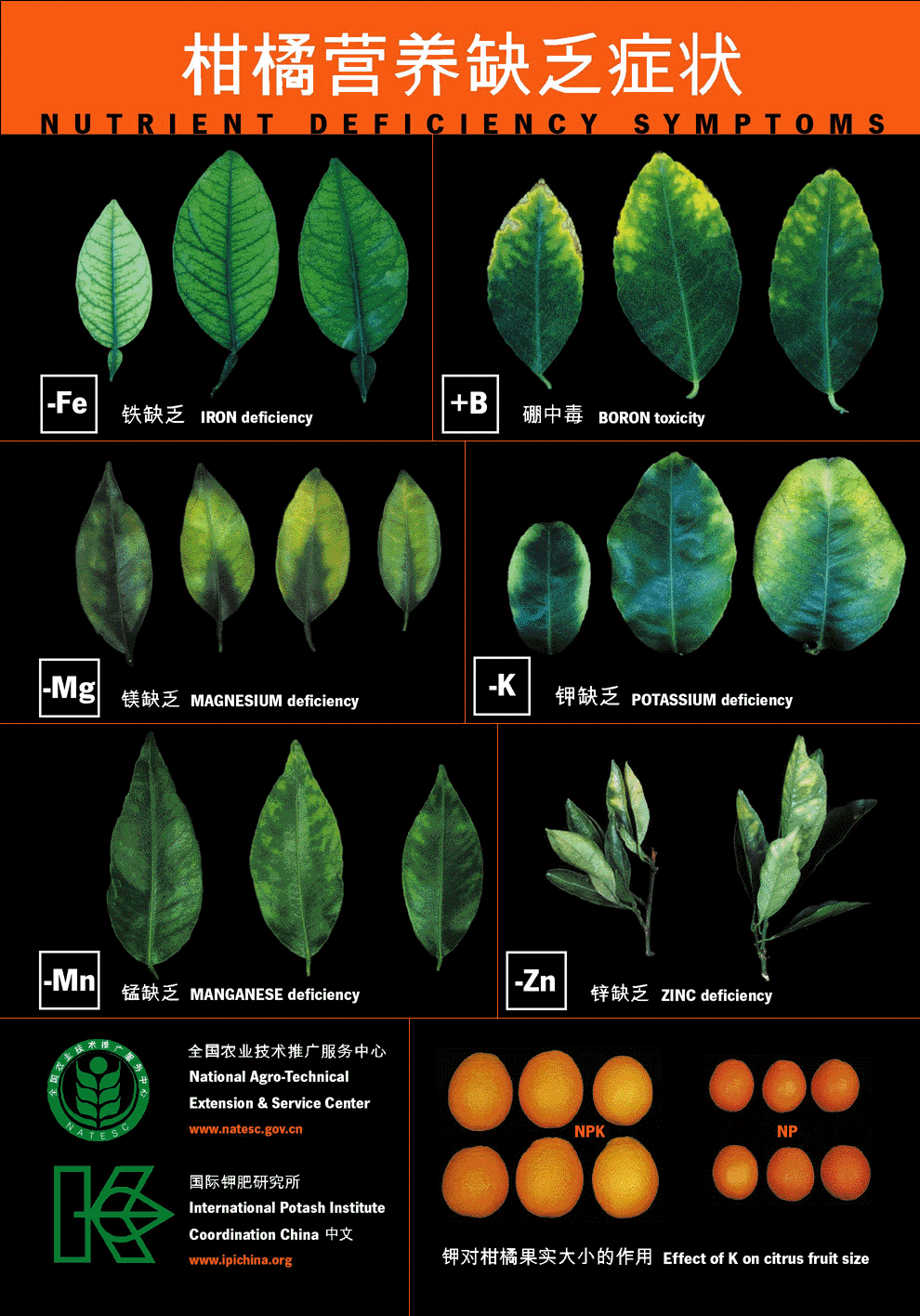
• Low to deficient potassium levels result in a thin peel which promotes
splitting
• Use mulch and compost to help maintain uniform moisture levels
• Use of slow release fertilizers helps provide a more uniform level of
nutrient uptake
:: موضوعات مرتبط:
✓ بیماری شناسی گیاهی


 برای دانلود به ادامه مطلب رجوع کنید




 نويسنده : عليرضا نسيمي





